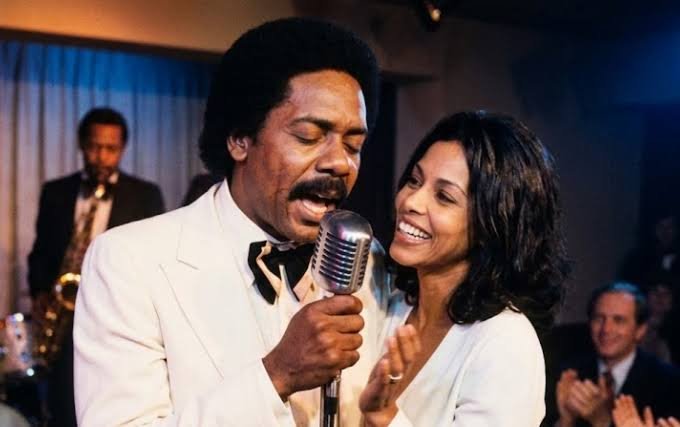
Cicely Johnston occupies an unusual place in the history of American entertainment: she is connected to one of the most recognizable television stars of the 1970s, yet she has spent much of her life away from the attention that usually follows celebrity. Best known publicly as the longtime wife of actor Demond Wilson, Johnston became part of a remarkable family story that stretched from Hollywood television fame to a quieter life beyond the spotlight. Her story is therefore less about celebrity spectacle and more about privacy, family, and the different ways people can exist alongside fame.
A Public Identity Shaped by Privacy
Unlike many people associated with classic television, Johnston never developed a large public archive of interviews, appearances, or personal statements. Consequently, much of what is written about her comes through her relationship with Wilson rather than through an extensive account in her own words. That distinction matters because celebrity biographies can easily transform repeated claims into apparent facts.
Available sources consistently identify her as Wilson’s wife and the mother of their six children. She was married to Wilson for decades, and her place in his personal history remained significant throughout his transition from entertainment into ministry.
At the same time, several secondary biographies describe her as having worked as a model and airline stewardess before becoming associated with Wilson. Those details appear frequently online, although they are not documented with the same strength as Wilson’s television career. A careful account should therefore present them as reported background rather than unquestionable fact.
Cicely Johnston and the World of 1970s Entertainment
The period in which Johnston entered public awareness was a fascinating era for American entertainment. Television was becoming an increasingly powerful cultural force, while Hollywood and popular culture were changing rapidly. Shows such as Sanford and Son brought Black performers and family dynamics into millions of American homes, creating stars whose personal lives could attract almost as much curiosity as their professional work.
Demond Wilson became widely recognized as Lamont Sanford on Sanford and Son, which ran during the 1970s. His performance placed him at the center of one of the period’s most recognizable television comedies. Johnston, however, occupied a different position. She was close enough to the entertainment world to become part of the public narrative, but she did not appear to pursue the same level of visibility.
That contrast is important. Celebrity culture often assumes that proximity to fame automatically produces a desire for fame. Johnston’s public record suggests otherwise. Her story illustrates how someone can be connected to a major entertainment career while maintaining a comparatively private identity.
A Small but Notable Screen Connection
One of the more concrete entertainment details associated with Johnston is her appearance in the 1974 film Caged Heat. IMDb lists Cicely Johnston among the film’s cast, identifying her as an actress and connecting her with the production.
The credit is particularly interesting because Caged Heat was directed by Jonathan Demme, who would later become one of America’s most respected filmmakers. However, Johnston did not go on to establish a long acting career comparable to her husband’s television work. The available record instead points toward a brief connection with film rather than a sustained Hollywood career.
This small screen credit also adds another dimension to her story. She was not simply someone who encountered entertainment because of marriage. There was at least a documented connection to the industry itself. Yet, rather than turning that connection into a lasting public career, she remained largely outside the entertainment spotlight.
A Snapshot of the Family Story
| Person or element | Role in the public story |
|---|---|
| Cicely Johnston | Private figure, longtime wife of Demond Wilson |
| Demond Wilson | Actor best known as Lamont Sanford on Sanford and Son |
| Six children | The couple’s family |
| Caged Heat | 1974 film in which Johnston received a screen credit |
| Sanford and Son | Television series that established Wilson as a household name |
The family dimension is central to understanding Johnston’s public identity. Reports consistently state that she and Wilson had six children, although individual sources sometimes provide incomplete or inconsistent family details.
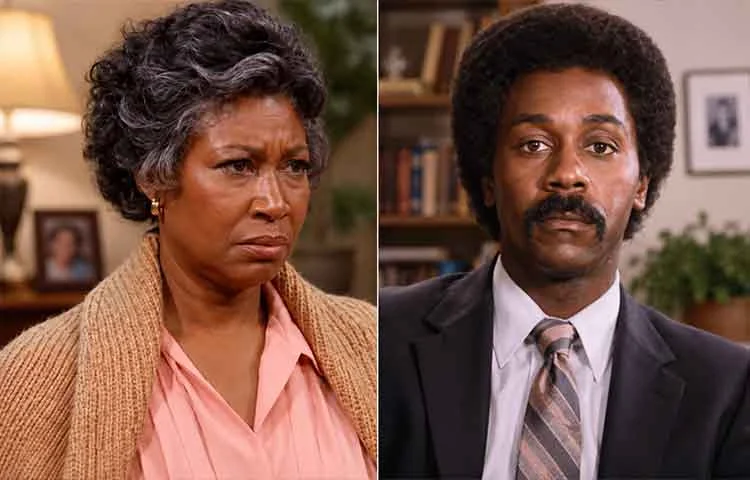
For a couple connected to Hollywood during such a visible period, raising a large family while maintaining privacy represented a different kind of life than the celebrity culture often imagined around television stars. Their family story extended well beyond Wilson’s years as a sitcom performer.
Marriage During a Changing Hollywood Era
Johnston’s marriage to Wilson began in the 1970s, when Sanford and Son was helping establish him as a major television personality. Secondary sources commonly give May 3, 1974, as the marriage date, although details about the couple’s early relationship are not extensively documented through primary sources.
The timing is culturally significant. The early 1970s were a period when American television was becoming more diverse and increasingly willing to tell stories centered on Black families, neighborhoods, and experiences. Wilson’s career existed within that transformation.
For Johnston, meanwhile, marriage to a television personality did not result in a highly publicized personal brand. Instead, she remained largely outside the machinery of celebrity publicity. That difference makes the couple’s story interesting today: one partner’s professional identity was built around visibility, while the other’s public identity was shaped by discretion.
Beyond the Sitcom Spotlight
Wilson’s career eventually developed beyond acting. After his years on television, he became increasingly associated with Christian ministry and faith-based work. That transition represented a significant change from the entertainment environment that had first made him famous.
Johnston’s life consequently became connected to two very different chapters of Wilson’s story: the Hollywood years and the later religious and family-centered period. Yet there is relatively little reliable public material in which she explains that transition herself.
That silence should not be filled with assumptions. Instead, it highlights one of the most important aspects of her biography: she has remained a largely private person. Modern celebrity culture often encourages constant visibility, but her story belongs to an earlier tradition in which a famous person’s spouse could remain outside the center of public attention.
Why Her Privacy Matters
The fascination surrounding Johnston is partly created by what is not known. There are no extensive collections of interviews that allow readers to reconstruct her personality in detail. Likewise, many online profiles offer confident descriptions of her character without providing strong evidence for those conclusions.
A responsible biography therefore needs to recognize the difference between documented history and interpretation. It is reasonable to say that Johnston maintained a low public profile because the available record shows relatively little media activity around her. It is less responsible to claim specific motivations for that privacy without her own documented words.
In this sense, her story raises a broader question about celebrity culture. Does a person connected to fame owe the public a complete account of their life? Johnston’s example suggests that the answer is not necessarily yes. Privacy can itself be a meaningful part of a public figure’s story.
The Significance of a Life Outside the Spotlight
There is also a cultural lesson in the way Johnston’s biography has been remembered. For decades, entertainment coverage has often focused on the visible star while treating spouses and family members as supporting characters. Yet family life can provide an entirely different perspective on fame.
Wilson’s television career was public, but family life was necessarily more personal. Johnston’s importance in that story comes partly from the continuity between those worlds. She was present during a period when Wilson moved through television success, later professional changes, and family life.
However, it would be misleading to turn that into an invented narrative about everything she experienced privately. The public record simply does not provide enough evidence. What can be said is that her long association with Wilson placed her close to an important chapter in American television history.
Remembering Demond Wilson and Her Place in His Story
Wilson died on January 30, 2026, according to recent reports, bringing renewed attention to his career and personal life. Coverage of his death identified Johnston among his surviving family members and again brought their long marriage into public discussion.
His death also changed the way audiences look at Johnston’s story. During Wilson’s lifetime, she was often introduced simply through her relationship with him. After his passing, interest in her life has increased because readers want to understand the person who shared such a long portion of his journey.
Yet the most respectful approach is not to manufacture details to satisfy that curiosity. Instead, Johnston’s story can be appreciated for what the available evidence actually shows: a woman connected to an important television figure, a family of six children, a brief documented film appearance, and a life that remained remarkably private despite decades of proximity to fame.
What Remains Unknown
Perhaps the most important part of any serious profile is acknowledging its boundaries. Johnston’s exact early-life history, education, professional development, and many personal experiences remain difficult to establish from strong public sources.
Some websites give specific birth information and detailed accounts of her early career. However, those claims are repeated inconsistently and are not always accompanied by primary documentation. Consequently, they should not be treated as settled facts.
The same caution applies to claims about wealth, lifestyle, personality, and private beliefs. Celebrity websites frequently publish numerical estimates or highly personal descriptions, but repetition does not automatically make such information reliable.
In Johnston’s case, the gaps are particularly meaningful. They demonstrate that a person can remain connected to American popular culture without surrendering every part of their biography to it.
A Different Kind of Celebrity Story
Ultimately, the story surrounding Johnston is not really about chasing fame. It is about the relationship between public recognition and private existence.
Her connection to Demond Wilson placed her near one of the defining sitcom careers of the 1970s. Her own screen credit in Caged Heat provides a small but tangible link to cinema. Her reported modeling and airline work suggest professional experiences before and around her emergence into public attention, although those details deserve cautious treatment because the strongest available documentation is limited.
Most importantly, however, her story demonstrates that cultural history is not made only by the people standing in front of cameras. Families, spouses, colleagues, and private individuals also form part of the environment surrounding famous careers.
Conclusion
Cicely Johnston remains an intriguing figure precisely because so much of her life stayed outside the public gaze. Her connection to Demond Wilson, her family life, and her brief documented appearance in Caged Heat place her within the cultural landscape of 1970s American entertainment. Nevertheless, she never became defined entirely by Hollywood.
Her story also offers a useful reminder for modern audiences. Fame can make a person visible, but it does not necessarily make every detail of their life public property. In an era increasingly dominated by constant exposure, Johnston’s relatively quiet public presence feels distinctive.
Rather than inventing answers for the questions that remain unresolved, a thoughtful account can recognize the value of what is known while respecting what has remained private. That balance makes her story more human—and, ultimately, more interesting—than a biography built entirely from speculation.