
Lupe Gidley is a name that often appears in connection with Hollywood actor Christopher McDonald, yet her story extends beyond being identified simply as the spouse of a familiar screen performer. Her own background includes theater, commercial work, music-video appearances, and acting credits that span several years. At the same time, she has maintained a comparatively private public profile, making her biography less straightforward than those of many entertainment figures.
A Life Shaped by Performance Rather Than Celebrity
Unlike many people who become recognizable through entertainment, Gidley does not appear to have built her identity around constant media attention. Instead, her professional history points toward the working side of performance, where theater, auditions, commercials, and smaller screen opportunities can be as important as major film roles.
According to biographical accounts drawing on family history, she grew up in a family connected to sailing and spent part of her childhood between Mexico and Northern California. Her brother, professional racing driver Memo Gidley, has also discussed aspects of their family background. These details provide an unusual setting for someone who would eventually enter the entertainment world.
Lupe Gidley and Her Early Entertainment Career
Her professional path became clearer through theater and commercial performance. Sources describing her career say that she studied theater at the California Institute of the Arts and worked with the New Mexico Repertory Theater Company. She also appeared in commercial campaigns before moving into more recognizable screen-related work.
This background matters because it places her career in a broader tradition of performers who build experience gradually. Furthermore, theater requires a different kind of discipline from celebrity culture: performers repeatedly develop characters, work with ensembles, rehearse extensively, and perform without the guarantee of lasting public recognition.
Consequently, her story is less about becoming a conventional Hollywood star and more about participating in the entertainment industry on her own terms.
The Billy Joel Connection
One of the most recognizable moments associated with her early career came in 1989, when she appeared in Billy Joel’s music video for We Didn’t Start the Fire. Interestingly, she was credited under the professional name Meg James at the time, a detail that later contributed to confusion surrounding her entertainment history.
The appearance is significant not simply because of the popularity of the song. It also illustrates how entertainment records can become fragmented over time. A performer may use one name professionally, another name later, and eventually become known through a family connection. Years afterward, those different identities can make a relatively modest career appear mysterious when it is actually a product of changing credits and incomplete archives.
A Quick Look at Her Public Profile
| Aspect | What is publicly documented |
|---|---|
| Name | Lupe Gidley |
| Professional credit | Lupe McDonald |
| Entertainment background | Theater, commercials and screen work |
| Notable early appearance | Billy Joel’s We Didn’t Start the Fire music video |
| Family connection | Sister of racing driver Memo Gidley |
| Spouse | Actor Christopher McDonald |
| Later credited work | Projects including Money Shot and Klarinet Klub |
| Public profile | Generally private and low-key |
IMDb identifies Lupe McDonald as known for projects including Daft Punk: The Prime Time of Your Life, Money Shot, and Klarinet Klub, while also listing Lupe Gidley as a nickname.
Meeting Christopher McDonald
Perhaps the most frequently searched aspect of her biography is her relationship with Christopher McDonald. Their connection reportedly began in the theater world around 1989, when both were working with the New Mexico Repertory Theater Company. That detail gives their relationship a more interesting beginning than the usual celebrity-meets-partner narrative: both were connected through performance before one became widely recognized for major screen roles.
Christopher McDonald subsequently developed a long career as a character actor, with audiences particularly familiar with his performance as Shooter McGavin in Happy Gilmore. As his career became more visible, however, Gidley generally remained outside the center of the publicity surrounding him.
That contrast has become one of the defining features of their public story.
Family and the Choice to Remain Private
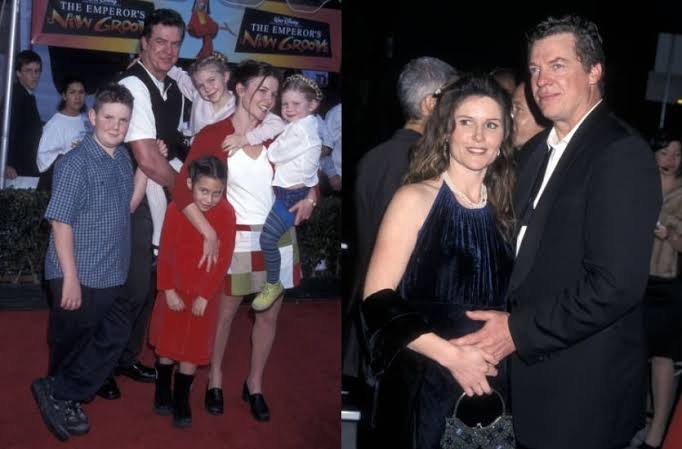
Gidley’s public biography is also closely connected with family life. Several sources report that she and McDonald raised four children, although detailed information about their family has generally remained limited. That restraint is notable in an entertainment culture where relatives of celebrities can themselves become public figures.
Moreover, the limited amount of personal information available should not automatically be interpreted as evidence of a hidden dramatic story. Sometimes privacy is simply privacy. Gidley appears to have maintained a life in which family and personal relationships were not continuously presented for public consumption.
That approach creates an interesting contrast with modern celebrity culture, where visibility can become almost as valuable as professional achievement.
Why Her Biography Is Frequently Misunderstood
Searching for Lupe Gidley can produce conflicting information. Some online biographies publish exact birth dates, educational details, financial estimates, or claims about her personal life without clearly establishing where those facts originated. Other sources repeat the same information until it appears authoritative.
However, repetition is not the same as verification.
For example, recent biographical research has pointed out that several commonly circulated details about her background are difficult to substantiate, while stronger accounts rely on family recollections and documented entertainment credits.
Therefore, the most responsible portrait separates documented career information from claims that remain uncertain. This is particularly important when writing about a person who has deliberately maintained a relatively low public profile.
The Meaning of a Quieter Hollywood Story
There is a cultural fascination with people who live close to celebrity without constantly participating in it. Hollywood traditionally celebrates visibility: premieres, interviews, publicity campaigns, photographs, and recognizable names. Yet Gidley represents another possibility.
Her career demonstrates that participation in entertainment does not necessarily require a lifelong pursuit of fame. A person can perform, work in theater, appear in recognizable projects, and then allow family and private life to become more important than publicity.
In that sense, her story is not an absence of achievement. Rather, it is a reminder that public recognition and personal significance are not always the same thing.
What Her Career Tells Us About Entertainment
Gidley’s professional history also reflects the less glamorous mechanics of acting. Theater training can lead to commercials; commercials can lead to music videos; music videos can become part of an actor’s permanent public record. Later, smaller film and short-form projects may continue the journey without producing household-name recognition.
Her listed credits after the 1980s include work connected with Daft Punk’s The Prime Time of Your Life, Money Shot, Finding Out, and Klarinet Klub. IMDb specifically identifies several of these credits under Lupe McDonald.
Consequently, describing her simply as “Christopher McDonald’s wife” leaves out an important part of the story. She had an entertainment career of her own, even if it was never built around blockbuster stardom.
Why Lupe Gidley Still Draws Interest
Interest in her has endured largely because several worlds meet in one biography: theater, music videos, Hollywood, family, and privacy. Her association with Christopher McDonald naturally attracts searches, but her own career gives those searches additional substance.
At the same time, renewed attention to McDonald’s work has periodically brought curiosity back to his family and personal history. Yet Gidley remains an example of someone whose public identity is not completely defined by the fame of the person beside her.
That distinction is important. A biography should not measure someone’s significance solely by how famous their spouse became.
A More Balanced Way to Understand Her Story
Ultimately, the most compelling aspect of her story may be its restraint. Lupe Gidley participated in entertainment, developed experience as a performer, appeared in recognizable projects, and became part of a long-standing Hollywood family. Nevertheless, she did not turn every part of that experience into a public narrative.
That makes the available evidence especially valuable. Rather than filling gaps with speculation, it is better to recognize what is documented and allow the unknown portions of her life to remain unknown.
In an era when celebrity biographies often become exercises in constant exposure, that restraint has its own cultural significance.
Conclusion
Lupe Gidley’s story sits at an unusual intersection of performance and privacy. She has a documented connection to theater, commercial work, music-video appearances, and later screen projects, while her marriage to Christopher McDonald has placed her within the orbit of Hollywood for decades.
Yet her biography is ultimately more interesting when viewed independently of celebrity labels. She represents the many performers whose careers develop through stages, smaller projects, and opportunities that may not lead to conventional stardom.
Most importantly, her story demonstrates that being close to Hollywood does not require living entirely in its spotlight. For Gidley, the lasting narrative appears to be one of creative experience, family, and a deliberate distance from constant public attention.