Introduction: Kobe Bryant and Sam Zell in the Same Cultural Conversation
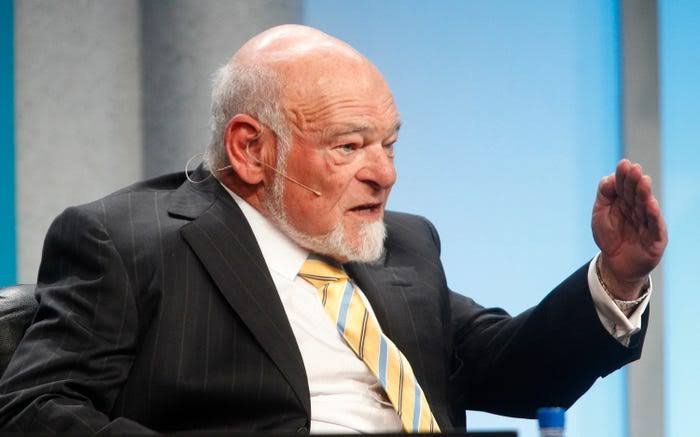
Kobe Bryant and Sam Zell came from dramatically different worlds, yet their names occasionally appeared within the same rooms and conversations about ambition, leadership, performance, and success. Bryant became one of basketball’s defining figures, while Zell built a reputation as a pioneering real-estate investor and entrepreneur. Their connection is best understood not as a documented personal partnership, but as an intersection of two powerful ideas: relentless preparation and the willingness to challenge conventional thinking.
That intersection became particularly visible through the SALT Conference, where both men appeared among an extraordinary collection of business, political, cultural, and sports figures. The 2016 conference listed both Bryant and Zell among its featured participants, placing an elite athlete and an influential investor within the same broader intellectual environment.
Two Different Careers, One Obsession With Excellence
Kobe Bryant built his reputation through basketball, but his influence eventually stretched far beyond the court. His career became associated with preparation, discipline, competitiveness, and an almost obsessive attention to improvement. Long after his playing career, those qualities continued to shape the way entrepreneurs, athletes, and young professionals discussed achievement.
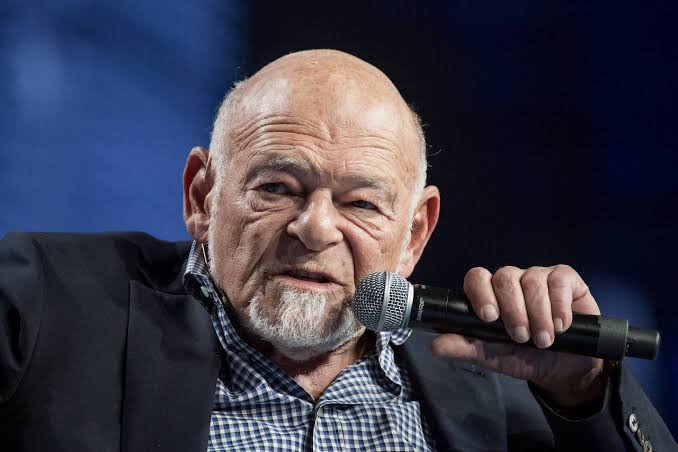
Sam Zell approached excellence from another direction. Rather than competing on a basketball court, he navigated property markets, investments, companies, and economic cycles. His career became closely associated with identifying opportunities when other investors were uncomfortable, studying markets carefully, and trusting his own judgment.
Although their professions were fundamentally different, both stories demonstrate an important principle: exceptional performance rarely develops by accident. It usually emerges from repeated observation, preparation, experimentation, and a willingness to remain committed when the easy option is to stop.
A Snapshot of Two Influential Figures
| Figure | Known for | Broader influence |
|---|---|---|
| Kobe Bryant | NBA career, Los Angeles Lakers, competitive philosophy | Sports, entrepreneurship, storytelling and leadership |
| Sam Zell | Real-estate investing and entrepreneurship | Business, investment strategy and corporate leadership |
Bryant’s influence grew from the visibility of professional sport, while Zell’s emerged primarily through business and investment. Nevertheless, both became reference points for people interested in understanding what separates ordinary achievement from exceptional performance.
The SALT Conference Intersection
One of the clearest documented intersections between Kobe Bryant and Sam Zell came through the SALT Conference. The 2016 event in Las Vegas brought together more than 1,800 participants from finance, economics, public policy, technology, philanthropy, entertainment, and sports. Bryant and Zell were both listed among the program’s featured figures.
That setting is important because SALT was designed around the exchange of ideas across industries. Consequently, Bryant’s presence was not simply about basketball, just as Zell’s presence was not merely about real estate. The conference represented a broader cultural shift in which athletes increasingly became voices on leadership and business, while entrepreneurs increasingly became public figures whose philosophies attracted audiences beyond traditional finance.
In that environment, the two names made sense together even without evidence of a close personal relationship.
The Lakers Connection Through Sam Zell and Phil Jackson
There is another interesting thread connecting Zell to the Lakers world. In 2007, the Los Angeles Times reported that Lakers coach Phil Jackson had a longstanding acquaintance with Zell dating back to Chicago. Jackson described knowing Zell from his Chicago days, including sharing an interest in motorcycles and spending time together socially.
This detail adds useful context to the broader story. Bryant spent much of his professional life working under Jackson’s coaching during one of the most significant periods of his career. Zell, meanwhile, had his own relationship with Jackson. That does not establish a direct personal relationship between Bryant and Zell, but it demonstrates how their professional circles could overlap through the Lakers and the wider world of high-performance leadership.
Why the Comparison Is So Fascinating
At first glance, comparing a basketball legend with a real-estate billionaire may seem artificial. However, the comparison becomes more compelling when the subject is not occupation but mindset.
Bryant’s career illustrated the value of repetition, preparation, and competitive focus. Zell’s career demonstrated the importance of recognizing opportunity, understanding risk, and refusing to follow the crowd simply because it was comfortable.
Both approaches require judgment.
For an athlete, preparation can mean studying opponents, refining technique, and understanding the smallest details of performance. For an investor, preparation can mean studying markets, examining economic conditions, understanding an asset, and determining whether popular opinion is missing something.
The environments differ, but the underlying intellectual habit is remarkably similar: pay attention to details that other people overlook.
The Power of Studying the Greats
The cultural legacy surrounding both figures also reveals something about modern ambition. People increasingly study successful individuals not simply because they want to imitate their achievements, but because they want to understand how those achievements were constructed.
A recent discussion featuring entrepreneur and historian David Senra explicitly placed Sam Zell and Kobe Bryant within a conversation about studying exceptional people. The episode discussed Zell’s business wisdom alongside Bryant’s competitive philosophy, emphasizing the importance of learning from people who continually studied their respective crafts.
That idea is especially relevant today. In an era filled with motivational clips and simplified success stories, the more valuable lesson may be the opposite: meaningful achievement tends to involve years of learning, adjustment, repetition, and uncomfortable decisions.
Different Forms of Risk
Another useful point of comparison is risk.
Bryant’s risks were often visible. A difficult shot, a demanding season, an attempt to return from injury, or the pressure of carrying expectations could be seen immediately by millions of spectators.
Zell’s risks were less visible but potentially enormous. Investment decisions unfold through markets, negotiations, economic cycles, and changing valuations. The consequences may take years to become clear.
Therefore, their careers offer two different interpretations of courage. In sport, courage can mean accepting responsibility in a highly visible moment. In business, it can mean acting when the available information is incomplete and the prevailing opinion points elsewhere.
Neither approach eliminates uncertainty. Instead, both require learning how to make decisions while uncertainty remains.
The Human Side of Extraordinary Achievement
The fascination with figures such as Bryant and Zell can sometimes make achievement appear almost mechanical. People focus on the trophies, companies, valuations, awards, and public recognition. Yet behind those outcomes are individuals navigating pressure, expectations, setbacks, relationships, and changing circumstances.
Bryant’s public evolution was particularly notable. He became known not only for athletic achievement but also for developing interests in storytelling, creativity, entrepreneurship, and mentoring. His later career demonstrated that identity does not have to remain fixed after professional success.
Zell likewise represented a career built through adaptation. His reputation was shaped by a willingness to move across changing business environments rather than treating one successful formula as permanent.
That adaptability may be one of the strongest lessons hidden within the comparison.
What Their Shared Cultural Space Tells Us
The appearance of both figures within the SALT ecosystem reflects a broader cultural phenomenon: the boundaries between sports, business, entertainment, and entrepreneurship have become increasingly fluid.
Athletes are now frequently expected to understand branding, investment, media, philanthropy, and entrepreneurship. At the same time, business leaders are increasingly evaluated through narratives of personality, resilience, leadership, and personal philosophy.
As a result, someone can enter a conference as an athlete and become part of a conversation about business leadership. Likewise, an investor can become a cultural personality whose ideas influence people far outside the financial world.
That transformation helps explain why Kobe Bryant and Sam Zell can meaningfully appear in the same article even though their careers were built on entirely different foundations.
A Legacy Built Beyond the Original Profession
The most enduring figures often become larger than the professions that made them famous.
Bryant’s name eventually came to represent more than basketball statistics. It became associated with a philosophy of preparation and personal standards. Zell’s reputation likewise extended beyond individual property transactions toward broader conversations about entrepreneurship, investment judgment, and economic thinking.
Importantly, however, their legacies should not be reduced to slogans. Their careers were complicated, and neither can be adequately explained through a single motivational phrase.
The more useful approach is to examine the habits behind their accomplishments: curiosity, preparation, competitiveness, adaptability, and a willingness to keep learning.
Conclusion: Two Paths Toward the Same Question
Kobe Bryant and Sam Zell followed radically different professional paths, but their appearance within the same broader cultural and intellectual spaces highlights an enduring question: what does it actually take to become exceptionally good at something?
Bryant answered that question through decades of basketball, preparation, competition, and reinvention. Zell approached it through entrepreneurship, investment, risk, and an instinct for opportunity.
Their stories should not be treated as identical, nor should the available evidence be stretched into a personal relationship that has not been established. Instead, their significance lies in the contrast. One mastered a visible arena where millions watched every decision; the other operated in markets where many of the most important decisions were understood only years later.
Together, however, the two names offer a compelling cultural study of ambition. Greatness can emerge in very different forms, but it often begins with the same impulse: to understand the craft deeply, challenge assumptions, keep learning, and refuse to settle for ordinary performance.