Introduction
timbre meaning begins with a simple question: why can two instruments play the same note at the same volume and still sound completely different? The answer lies in timbre, one of the most important yet frequently misunderstood ideas in music and sound. While pitch tells us how high or low a sound is, and loudness tells us how strong it is, timbre helps us recognize its character. It is the reason a piano does not sound like a violin and why familiar voices can often be identified without seeing the speaker.
What Does Timbre Meaning Actually Describe?
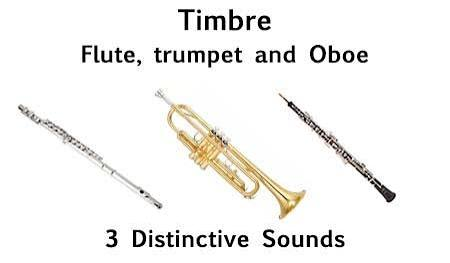
At its heart, timbre meaning refers to the distinctive quality or character of a sound. It allows listeners to distinguish between sounds that share the same pitch and loudness. For example, if a flute and trumpet play the same musical note at approximately the same volume, their sounds remain noticeably different. That difference is largely explained by timbre. In everyday language, people might describe timbre as the “color,” “texture,” warmth, brightness, roughness, or richness of a sound.
Why Timbre Is Different From Pitch and Loudness
Understanding timbre becomes easier when it is compared with the other major qualities of sound. Pitch relates primarily to frequency, while loudness concerns perceived intensity. Timbre, however, describes the broader sonic character that remains after those qualities are considered. Therefore, changing a note from quiet to loud does not necessarily change the instrument producing it. Likewise, playing a different note on the same instrument usually preserves recognizable characteristics of its sound.
| Sound quality | What it tells us | Simple example |
|---|---|---|
| Pitch | How high or low a sound seems | High musical note |
| Loudness | How strong or soft it seems | Quiet versus loud piano |
| Timbre | What gives the sound its character | Piano versus violin |
How Timbre Is Created Inside a Sound
Timbre is strongly connected to the physical structure of a sound wave. Most musical sounds contain a fundamental frequency along with additional frequencies called harmonics or partials. The balance between these components influences how the ear perceives the sound. Consequently, two instruments can produce the same fundamental pitch while having very different harmonic structures. The attack, sustain, and decay of a sound also contribute to its identity, which is why the beginning and evolution of a note matter as much as the note itself.
The Human Voice Is a Powerful Example of Timbre
Few examples demonstrate timbre more clearly than the human voice. People can often recognize a family member or friend from a short sentence even when the speaker is somewhere out of sight. Although pitch and speaking style contribute to recognition, vocal timbre plays a major role. Differences in vocal anatomy, resonance, articulation, and habitual speaking patterns create a distinctive sonic fingerprint. As a result, voices can feel familiar almost immediately, sometimes before the listener consciously identifies who is speaking.
Timbre Meaning in Musical Instruments
Musicians experience timbre every time they choose an instrument. A cello may create a deep, resonant impression, whereas a trumpet can sound bright and commanding. Meanwhile, a clarinet may have a smoother, woody character. These descriptions are subjective, but they point toward real differences in acoustic behavior. Instrument construction matters enormously: the shape of the body, materials, vibrating components, and method of producing sound all influence the resulting spectrum. Thus, timbre becomes part of an instrument’s musical personality.
Why the Same Instrument Can Have Different Timbres
Timbre is not always fixed. A single instrument can produce contrasting sound qualities depending on how it is played. A violinist, for instance, can change bow pressure, bow position, articulation, and playing technique. Similarly, a pianist can alter the character of a note through touch and pedaling. Moreover, electronic instruments and recording equipment can deliberately reshape timbre through filters, equalization, distortion, and synthesis. In modern music production, therefore, timbre is not merely something musicians inherit from an instrument; it can also become something they actively design.
Timbre and the Emotional Character of Music
Although timbre is a technical concept, its importance extends deeply into human emotion. A warm sound may suggest intimacy, while a sharp or metallic sound can create tension. A breathy vocal performance may feel fragile or personal, whereas a bright brass section can communicate energy and confidence. These reactions are influenced by musical context and cultural expectations, so there is no universal emotional meaning for every timbral quality. Nevertheless, composers and performers deliberately use sonic character to shape how listeners experience a piece.
How Technology Changed the Way We Think About Timbre
Recording technology has transformed timbre from something primarily performed into something that can also be engineered. In studios, producers can manipulate frequencies, dynamics, reverberation, distortion, and other characteristics to reshape sounds. Digital synthesizers go even further by allowing musicians to construct entirely new sonic textures. Consequently, modern music contains an enormous range of timbres that may have no direct acoustic equivalent. Film scores, video games, electronic music, and sound design all depend heavily on these possibilities.
Timbre in Everyday Life Beyond Music
Timbre is not limited to concert halls or recording studios. Everyday sounds have recognizable qualities too. The difference between a bicycle bell and a doorbell, for example, is not simply a matter of pitch. Their acoustic structures and temporal patterns create different identities. Similarly, people can distinguish footsteps, engines, appliances, and environmental sounds without consciously analyzing them. In this sense, timbre is part of how humans organize the constantly changing soundscape around them.
Why Timbre Matters to Singers and Musicians
For performers, developing an awareness of timbre can become an important artistic skill. Singers may experiment with resonance, articulation, breath control, and vocal placement to produce different qualities. Instrumentalists likewise explore technique to create particular textures. Instead of asking only whether a note is correct, an experienced performer may ask whether the note has the desired character. That distinction can transform interpretation, because technically accurate music can still feel emotionally flat if its sonic character does not match the artistic intention.
The Cultural Side of Sound Character
Different musical traditions often value contrasting timbral qualities. One culture may celebrate a bright, penetrating instrument, while another may emphasize softness, resonance, or breathiness. Traditional instruments are frequently designed around local materials, performance practices, and cultural purposes. Therefore, timbre can carry cultural memory. The sound of a particular instrument may evoke ceremonies, landscapes, communities, or generations, making its acoustic identity inseparable from its social meaning.
Timbre Meaning in Modern Audio and Sound Design
In contemporary media, sound designers treat timbre as a storytelling tool. A science-fiction film may use unfamiliar electronic textures to suggest an alien environment, while a historical drama may emphasize acoustic instruments associated with a particular period. Likewise, game designers use sound character to distinguish environments, objects, and actions. Because audiences respond to sonic differences so quickly, carefully designed timbres can communicate information before dialogue or visual explanation becomes necessary.
How Listeners Learn to Recognize Timbre
People become better at identifying timbre through repeated listening. Musicians often develop particularly refined auditory awareness because they spend years comparing instruments, voices, techniques, and recordings. However, everyone develops some level of timbral recognition naturally. A person may not know the technical vocabulary for a sound, yet still recognize that one singer sounds “husky” or that one guitar has a “brighter” character. Language provides metaphors that help people describe an experience the ear already understands.
FAQs About Timbre Meaning
Is timbre the same as tone?
Not exactly. The words are sometimes used interchangeably in everyday conversation, but timbre more specifically refers to the distinctive character of a sound. “Tone” can have several meanings depending on context, including pitch, sound quality, or musical tone.
Can timbre change the emotion of music?
Yes. Timbre can strongly influence emotional perception. However, its effect depends on musical context, performance, culture, and the listener’s personal associations.
Can two voices have the same pitch but different timbres?
Absolutely. Two people can sing or speak at the same approximate pitch while sounding distinctly different because their vocal characteristics and harmonic structures differ.
Can technology create new timbres?
Yes. Synthesizers, digital processing, sampling, and studio effects allow creators to construct or modify sounds in ways that may be difficult or impossible to produce acoustically.
Conclusion: Hearing More Than a Note
Ultimately, timbre meaning is about the identity of sound. Pitch may tell us which musical note we hear, and loudness may tell us how powerful it seems, but timbre tells us what that sound feels like as a sonic object. It separates one instrument from another, one voice from another, and one musical tradition from another. More importantly, it reminds us that listening is not simply about detecting sounds; it is about recognizing character, texture, memory, and expression. Once listeners begin paying attention to timbre, familiar sounds can reveal an entirely richer world.